


Stoic Quotes: 52 Sayings on Discipline, Fear, and Control
From Marcus Aurelius, Seneca, and Epictetus. Organized by the situations where a trader actually needs them.
The Stoics wrote for people making decisions under pressure with incomplete information. That is also a fair description of trading, which is why these two-thousand-year-old lines keep showing up on trading desks. This page collects fifty-two of them, drawn mostly from Marcus Aurelius' Meditations, Seneca's Letters, and the recorded teachings of Epictetus.
The quotes are grouped by theme rather than by author, because that is how you reach for them: not "what did Seneca say" but "what do I do with this fear". Each theme carries a short note on where the idea bites in practice. For the philosophy behind the quotes, start with our guide to Stoicism, and for the people, see the notable Stoics.
Discipline
The Stoics treated self-command as the foundation every other virtue stands on. The trading equivalent is process: the plan you wrote while calm is the only version of you qualified to make decisions in the middle of a session. These lines are about keeping authority over your own actions when the market invites you to hand it away.

No man is free who is not master of himself.
First say to yourself what you would be; and then do what you have to do.
You have power over your mind, not outside events. Realise this, and you will find strength.
Hold every hour in your grasp. Lay hold of today's task, and you will not need to depend so much upon tomorrow's.
Patience
Stoic practice rewards nothing for hurry. In markets, waiting is itself a position, and the trader who needs constant action pays for the entertainment. These quotes treat time as a tool rather than an enemy.
The willing are led by fate, the reluctant dragged.
It is not that we have a short time to live, but that we waste a great deal of it.
How long are you going to wait before you demand the best for yourself?
Putting things off is the biggest waste of life: it snatches away each day as it comes, and denies us the present by promising the future.
Loss
The Stoics rehearsed loss deliberately so it would never arrive as a stranger. A losing trade is either tuition or a wound, and the difference is usually whether its size was decided in advance. These lines are about holding things, including positions, with an open hand.
He who fears death will never do anything worthy of a man who is alive.
The things you think about determine the quality of your mind. Your soul takes on the colour of your thoughts.
Sometimes even to live is an act of courage.
What need is there to weep over parts of life? The whole of it calls for tears.
Volatility
For the Stoics, change was not a disruption of the natural order. It was the natural order. A volatile chart is the market being exactly what it is, and these quotes are for the days when that is hard to remember.
The universe is change; our life is what our thoughts make it.
Loss is nothing else but change, and change is nature's delight.
The only constant in life is change.
When you arise in the morning, think of what a precious privilege it is to be alive, to breathe, to think, to enjoy, to love.
Preparation
The Stoics practiced premeditatio malorum: rehearsing misfortune calmly, in advance, so the real thing would meet a prepared mind. For a trader that is the premortem, the stop placed before entry, and the size that survives the worst plausible range.

Luck is what happens when preparation meets opportunity.
The mind that is anxious about future events is miserable.
Begin at once to live, and count each separate day as a separate life.
If a man knows not which port he sails, no wind is favourable.
Greed
Seneca kept returning to one idea: enough is a decision, not an amount. Position sizing, profit targets, and the choice to stop trading a good day before it turns are all versions of that decision.
Wealth consists not in having great possessions, but in having few wants.
It is not the man who has too little who is poor, but the one who hankers after more.
He is a wise man who does not grieve for the things which he has not, but rejoices for those which he has.
No person has the power to have everything they want, but it is in their power not to want what they don't have.
Fear
Seneca's most quoted line says we suffer more in imagination than in reality, and most trading fear is exactly that: living a loss repeatedly before it happens, or instead of it happening. The Stoic answer is not fearlessness. It is doing the imagining once, on paper, and letting the plan act.
We are more often frightened than hurt; and we suffer more in imagination than in reality.
There is nothing so wretched or foolish as to anticipate misfortunes.
It is not death that a man should fear, but he should fear never beginning to live.
If you are distressed by anything external, the pain is not due to the thing itself, but to your estimate of it; and this you have the power to revoke at any moment.
Perspective
One trade is one line in a ledger you will keep for years. The Stoics were relentless about zooming out until the present moment took its true size. These quotes are the antidote to treating any single session as a verdict on you.

Take a good hard look at people's ruling principle, especially of the wise, what they run away from and what they seek out.
How much time he gains who does not look to see what his neighbour says or does or thinks.
The happiness of your life depends upon the quality of your thoughts.
Very little is needed to make a happy life; it is all within yourself, in your way of thinking.
Control
The dichotomy of control is the sharpest tool Stoicism owns: some things are up to you, most are not, and misery comes from confusing the two. Price, news, and other people's positioning are not up to you. Your size, your stop, and whether you follow your own rules are.
Make the best use of what is in your power, and take the rest as it happens.
Some things are within our power, while others are not. Within our power are opinion, motivation, desire, aversion. Not within our power are our body, our property, reputation, office.
Man is not worried by real problems so much as by his imagined anxieties about real problems.
The chief task in life is simply this: to identify and separate matters so that I can say clearly to myself which are externals not under my control, and which have to do with the choices I actually control.
Focus
Attention is finite and the market is designed to scatter it. The Stoic instruction is to do the thing in front of you with full seriousness: this analysis, this entry, this review. These quotes are about narrowing the aperture.
Concentrate every minute on doing what's in front of you with precise and genuine seriousness.
People are not disturbed by things, but by the views they take of them.
If you wish to be a writer, write.
Do every act of your life as though it were the very last act of your life.
Resilience
Every trader takes damage. The Stoics measured a person not by whether they were knocked down but by the quality of the getting up: the honest review, the unchanged process, the next trade taken at normal size. These lines are for the morning after a bad day.
Difficulties strengthen the mind, as labour does the body.
The impediment to action advances action. What stands in the way becomes the way.
It does not matter what you bear, but how you bear it.
A gem cannot be polished without friction, nor a man perfected without trials.
Uncertainty
The Stoics accepted that the future is not knowable and built their practice on what remains: acting well right now. Trading forces the same conclusion. You never trade the future; you trade a plan that spans the futures you cannot rank.
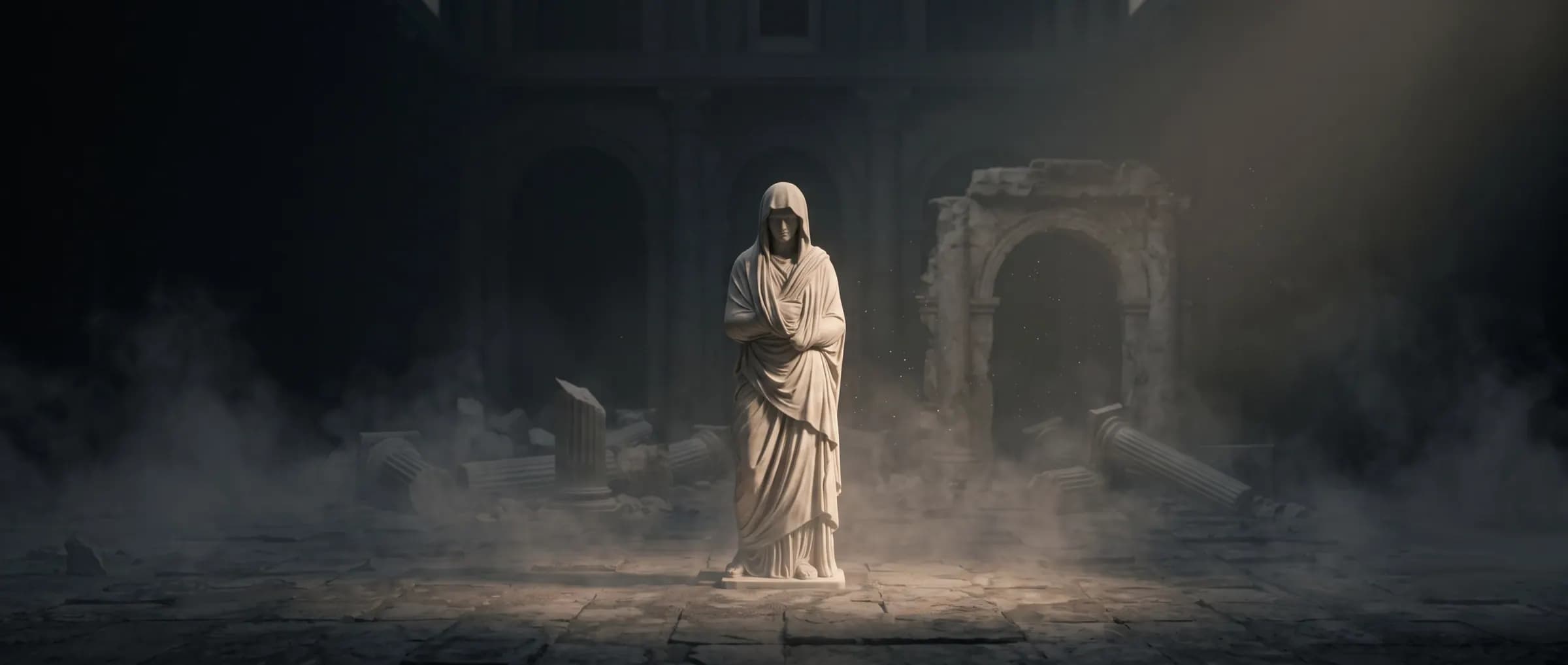
The whole future lies in uncertainty: live immediately.
True happiness is to enjoy the present, without anxious dependence upon the future.
Never let the future disturb you. You will meet it, if you have to, with the same weapons of reason which today arm you against the present.
Life is long if you know how to use it.
Temperance
Moderation sounds dull until you price its absence: oversized positions, overtraded sessions, and the compounding cost of always wanting more exposure. Temperance in trading is mostly arithmetic, and these quotes are the philosophy behind the arithmetic.

To be even-minded is the greatest virtue.
Freedom is the only worthy goal in life. It is won by disregarding things that lie beyond our control.
Associate with people who are likely to improve you.
Receive without conceit, release without struggle.
The people behind the quotes
Marcus Aurelius
Roman emperor from 161 to 180 AD. His Meditations were private notes to himself, never meant for publication, which is why they read like a man coaching his own discipline rather than lecturing an audience.
Seneca
Statesman, playwright, and advisor to Nero. His Letters to Lucilius are the most practical of the Stoic texts, full of advice on fear, wealth, and time from a man who had a great deal of all three.
Epictetus
Born a slave, he became the most influential Stoic teacher of his era. His students recorded his lessons as the Discourses and the Enchiridion, home of the dichotomy of control.
Cleanthes
The second head of the Stoic school, who watered gardens at night to pay for his study by day. A reminder that the philosophy was built by people who worked for a living.
Heraclitus
Not a Stoic: a pre-Socratic philosopher who lived centuries before the school was founded. The Stoics drew heavily on his idea that everything flows, which is why his lines on change sit comfortably in this collection.
Frequently asked questions
What is the most famous Stoic quote?
Probably Marcus Aurelius' line that you have power over your mind, not outside events. Epictetus' opening of the Enchiridion, that some things are within our power and others are not, is the most influential in practice. Attribution online is messy, so this page sticks to lines with solid sourcing in the Meditations, Seneca's Letters, and the Discourses.
Who were the main Stoic philosophers?
The three whose work survives at length are Marcus Aurelius, Seneca, and Epictetus. The school was founded earlier by Zeno of Citium and developed by Cleanthes and Chrysippus. Our notable Stoics page covers each of them in detail.
Was Heraclitus a Stoic?
No. Heraclitus was a pre-Socratic philosopher who died more than a century before Zeno founded the Stoa. He appears in this collection because the Stoics adopted his view of constant change, and his lines on flux express that theme better than almost anyone since.
How do traders use Stoic philosophy?
As a discipline framework, not a prediction method. The dichotomy of control maps cleanly onto trading: price and news are outside your control, while position size, stop placement, and rule-following are inside it. Our guide to Stoicism and trading walks through the full framework. Philosophy improves decisions, not outcomes; trading CFDs still involves substantial risk of loss.
Where do these quotes come from?
Mainly the Meditations of Marcus Aurelius, Seneca's Letters to Lucilius and essays, and the Discourses and Enchiridion of Epictetus, in widely used public-domain translations. Wording varies between translators, so you may know some of these lines in slightly different forms.
Put the philosophy on paper
The Stoic Trading Plan is a free workbook that turns these principles into rules you write for yourself: risk per trade, entry criteria, and the review that keeps you honest.